Monday, July 24, 2006

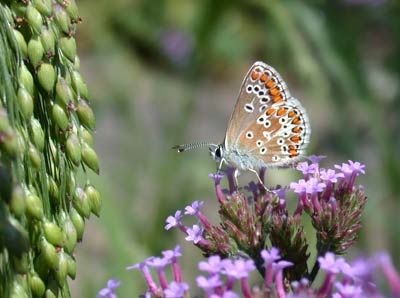
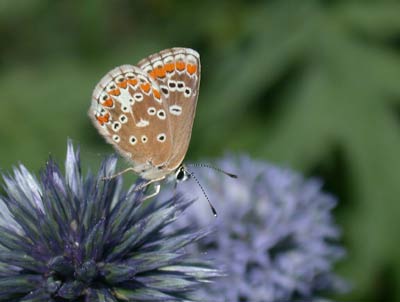
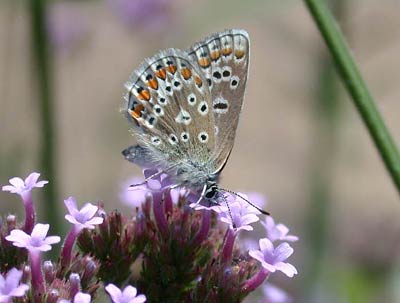
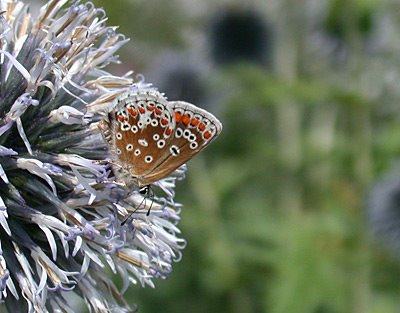
Brown Argus and Common Blue


Brown Argus

Common Blue

As a relative butterfly beginner, I'm finding it hard to get these two sorted out. I've had some excellent advice from the forum at www.ukbutterflies.co.uk - read it here. Now I need to swot up on my butterfly anatomy to make full use of it...


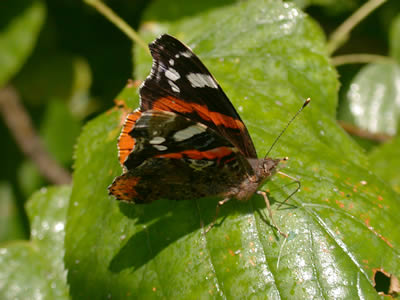
Painted Lady

Thank goodness not everything is hard to identify...

photos taken with Nikon Coolpix 995

Thursday, July 20, 2006

Butterflies

Brown Argus (I think!) - my favourite butterfly so far this year

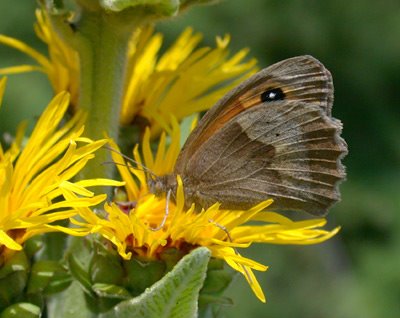
Meadow Brown

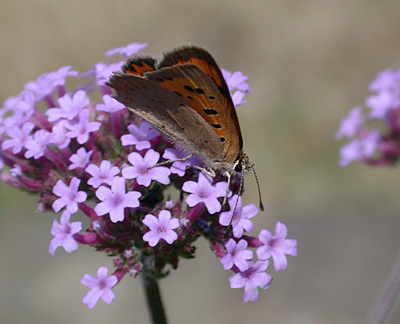
Small Copper

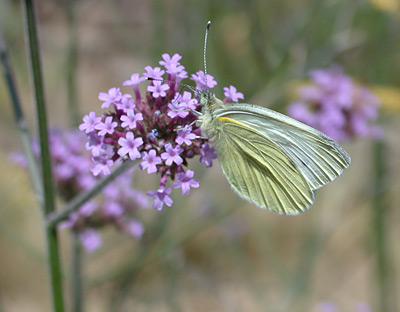
Small White

After staying up late to add the finishing touches to I and the Bird #28, it's back to normal with some insect shots from lunchtime.

It's way too hot at the moment to do anything very strenuous. We Brits just aren't used to 32 degrees Celsius!

photos taken with Nikon Coolpix 995

I and the Bird #28


Ah, my friends. Welcome to I and the Bird #28. I am Katie, your host for this evening. It is a great honour to have you all here. Tonight, I have gifts from the four corners of the globe for you to savour. No time to lose, so let's crack on with the posts, eh?

  • One of the fantastic things about IATB is that you read about birds you didn't know existed. Powerful Owl, Ninox strenua, anyone? Duncan's seen 'em in the outback and he's got the pictures to prove it, over at Ben Cruachan Blog.
  • On the other hand, surely just about everyone's familiar with the mighty Peregrine, Falco peregrinus. But not many people get as close as Amy of RiverBlog. And with those talons, you might not want to, either...
  • At Rigor Vitae, Carel Brest van Kempen writes about Peregrines setting up home in the most unlikely of situations.
  • Peregrines certainly are flavour of the month on IATB. And why not? Roger from Words & Pictures joins the throng, with fascinating findings about the Peregrines nesting on Derby Cathedral.
  • Despite the doom-and-gloom reports you read in the news, birds can thrive in close proximity to humans, as Andy of [the weirdly-named] Spiderlick shows with his lovely tale (and photo) of Grey Wagtails, Motacilla cinerea.
  • Blogging from possibly our most obscure, exotic location yet, Papua New Guinea (north of Australia, folks), David Ringer's Search and Serendipity post explains how some pesky ants made a 'gray and wet' day into something very special.
  • Conditions looked less than ideal for J Pat, from Eureka Nature, on his annual Bird Day Hike, but he found a semi-precious bird. Read on to find out what...
  • David (Science Boy) is a Kiwi and he's not afraid to show it. No, not a small, greeny, fuzzy fruit, or a weird brown bird with nostrils on the end of its beak, but a New Zealander. He's your guide for a tour of the much-neglected Aramoana area now.
  • Another Kiwi, Pohangina Pete, says: 'I don’t attempt to clean my bum with my back legs'. So that's alright, then. Join him to find out why midwinter is a good time to be in that neck of the woods.
  • If at first you don't succeed, try, try again. Seems that Pam's White-winged Doves, Zenaida asiatica, at Tortoise Trail are following that mantra to the letter (they win the booby prize for world's least-safe-looking nest, though).
  • Are you a birder?
  • Or perhaps a birdwatcher, chaser, lister, twitcher, robin-stroker or dude? Or none of the above? Doesn't really matter, as long as you enjoy the birds, says Leigh on Alis Volat Propiis.
  • Just when you thought that scientific names were useful, Rick from Birdaz.com reminds you that gulls' names are totally useless. Black-headed Gull should be Larus melanocephalus, but it's not, obviously... Go and swot up now...
  • Making his IATB debut, Richard from Wild West Yorkshire has strayed no further than the bottom of his garden to bring us brilliant artwork inspired by a humble Woodpigeon, Columba palumbus.

  • Lillian and Don explain why their birding journal is the best way to start their day at Bobolink Farm, every day.
  • We all like seeing birds close to our own homes, but as Rob 'The Birdchaser' shows, it doesn't always work for the birds involved!
  • Mike, who wants to see 10,000 Birds, reports that there's a heatwave in the US (same here in Blighty), but at least he's seen some good birds lately. Does anybody here like Heermann's Gulls, Larus heermanni?
  • 'More photos than you can shake a stick at' is possibly one way to describe Pewit, the blog of Graham 'The Cat' Catley. Last month, he journeyed to The Far North in search of birds and returned with a huge number of pics, including these gorgeous Bluethroats (Luscinia svecica).
  • Steve the Toadsnatcher has also been 'oop north' but 'only' as far as Shetland and Orkney, the northernmost bits of the UK. Long, long days make good birding, as the photos show.
  • In contrast, Mike Weedon (of Weedon's World of Nature fame) visited Sowth Effrica recently. Like a crocodile, he seems to have spent most of his time lounging around waterholes, but the waiting certainly paid off...
  • Patrick, normally resident at The Hawk Owl's Nest, has also been south and accidentally saw some great birds on the way.
  • Not forgetting Charlie Moores (oops!)... well, he's been east to Dubai and returned with a whole tange of goodies, including some Sooty Gulls, Larus hemprichii.
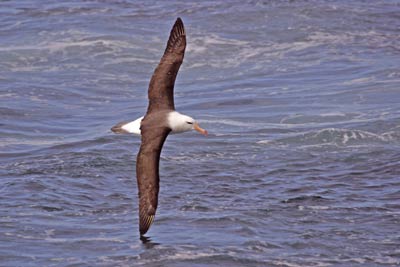
  • And what have I brought to the party? Sad stories of albatrosses from the Southern Hemisphere, but there's a good cause behind it all - 19 out of 21 albatross species face extinction! Read about what the Save the Albatross campaign is doing about it, then do your bit to help. Please.
That brings this evening's proceedings to a close. I hope you've enjoyed yourself and don't forget to send something for the next I and the Bird...

Sunday, July 16, 2006

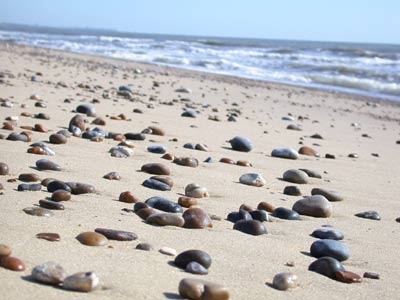
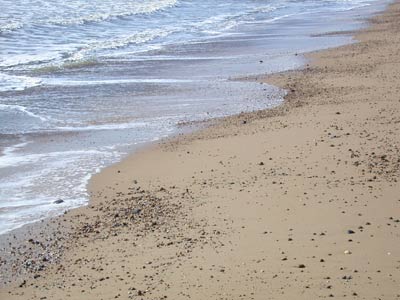
Beach


Sea: North Sea, Minsmere beach. Legs: model's own. Thanks Darren...

photos taken with Nikon Coolpix 995

Saturday, July 15, 2006

Minsmere and Sizewell

Redshank

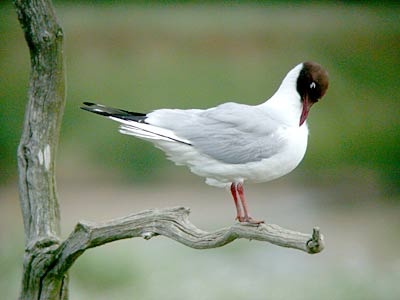
Black-headed Gull, Larus ridibundus arborea

Juvenile Moorhen

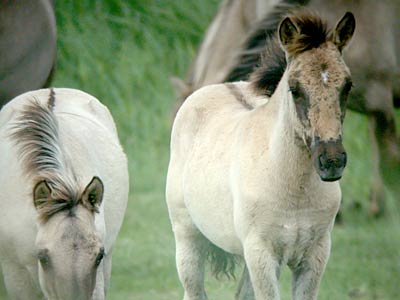
My first-ever equine digiscoping - Konik pony colts grazing the reserve

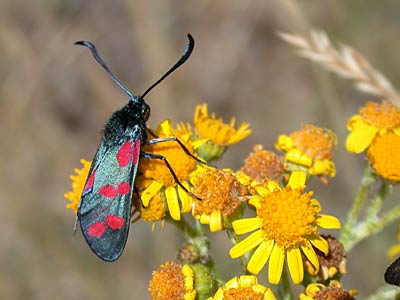
Six-spot Burnet Moth at Sizewell

The beast itself...

digiscoped photos taken with Nikon Coolpix 995 + Leica Apo Televid 77 with 20x eyepiece

Friday, July 14, 2006

Long weekend in Suffolk

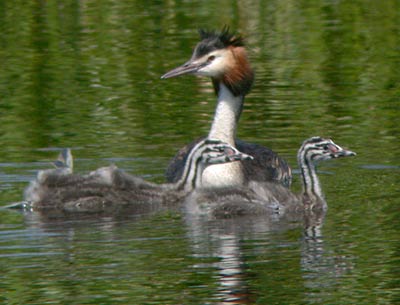
Great Crested Grebe and 'humbugs'

Friday afternoon near Lakenheath

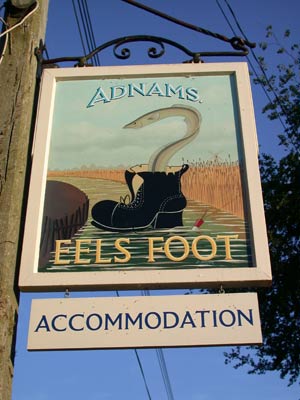
Friday evening in the Eel's Foot, Eastbridge


As always, important to sample local delicacies - Aspall's cider


Picking up goodies from Beerwolf Books, just across the road

digiscoped photos taken with Nikon Coolpix 995 + Leica Apo Televid 77 with 20x eyepiece

Wednesday, July 12, 2006

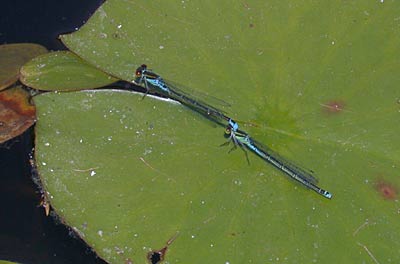
Small Red-eyed Damselflies


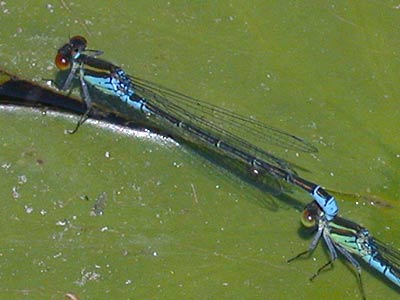
These are some of the first Small Red-eyed Damselflies to be recorded at The Lodge. Mark tipped me off as I happened to be wandering past and though I didn't really know what to look for, I managed to get a single photo of the pair 'in tandem'.

The problem is that they're really very similar to Red-eyed Damselflies, which are very numerous on the swimming pool at The Lodge. I was lucky to photograph the right pair, though a brief comparison with a nearby Red-eyed meant the size difference was discernable.

There's not much in it:
  • smaller size - 29mm body length for Small Red-eyed, v 35mm for Red-eyed
  • paler underside to eyes
  • greenish shoulder-stripes on male Small, where male Red-eyed is all black
What we found most helpful on our second visit was the pale blue tail tip (I'm sure there's a more technical description of that). On the Small Red-eyed, the tip reaches up onto one more segment than it does on the Red-eyed. It gives an appearance of having been dipped into blue paint at an angle of 45 degrees, compared to the 90 degrees of Red-eyed.

Identification suggestions much appreciated!

photos taken with Nikon Coolpix 995

Plantlife


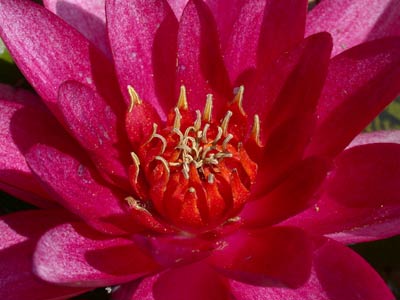
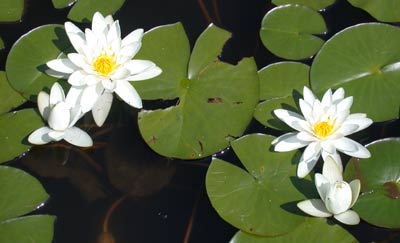
Waterlilies


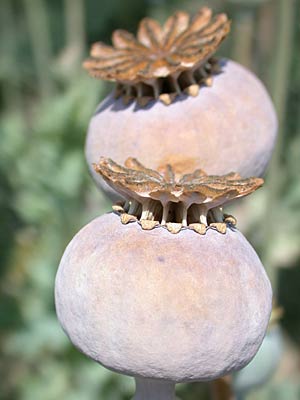
What happens to poppies when they die

photos taken with Nikon Coolpix 995

Insectlife


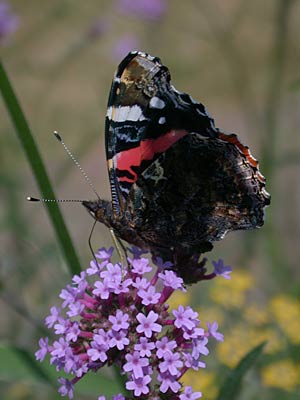
Red Admiral on Verbena

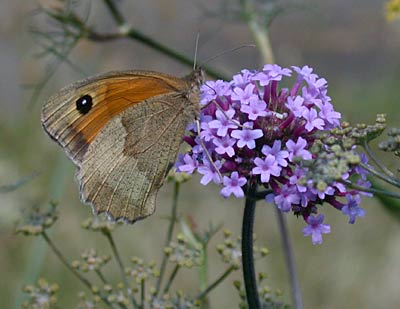
Meadow Brown on Verbena

Small White on Verbena...

There's a bit of a theme here. Insects seem to love Verbena. For this reason, I am trying to grow some from seed on my windowsill. From c120 seeds sown in the compost, only six have germinated, but they're doing OK.


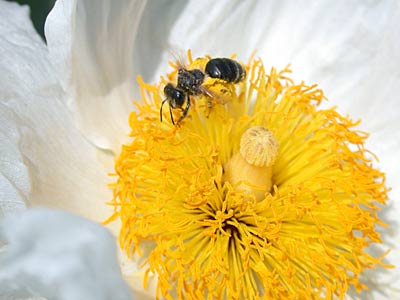
As happy as a bee in pollen

photos taken with Nikon Coolpix 995

Tuesday, July 11, 2006

Hummer


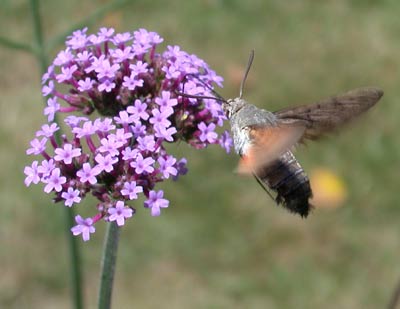
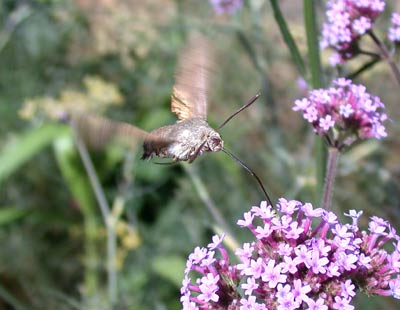
A couple of weeks ago, there were up to four Hummingbird Hawk-moths to be seen on Red Valerian at The Lodge. Now the Valerian has keeled over, where are the moths? I found this very worn, tatty-looking thing in the Memorial Garden on some Verbena (compare its colour with the pics here).

photos taken with Nikon Coolpix 995

Saturday, July 08, 2006

Save the Albatross


'It was harrowing! Never have I pushed myself to such limits before... I came to cracking point many times - 'rough' described all aspects of this trip! The sea, the food, the bunk and the smell.

'The swell reached 5 m on good days and the winds blew up to 40 knots on bad days... Food was cooked in lard and it was difficult to wash with the constant pitch and roll of the boat.

'The smell was concocted by the processing crew in the slaughter-house. It consisted of shark flesh, urine and faeces and was ever-present. I suffered nausea pretty much 70% of the time, but felt incredibly welcome by all on the vessel, who gave their all to assist me.'

What's it all about? No, not the weirdest reality TV show ever broadcast, but the day-to-day work of Maria Honig, a member of the Albatross Task Force. One of the aims of the Save the Albatross campaign is to get Task Force members onto longline fishing boats to help educate fishermen in how not to catch albatrosses accidentally.

The problem is that 100,000 albatrosses die each year on the end of longline fishing hooks. As they're big birds (some only breed every other year) and usually only have one chick at once, they can't keep up with the rate of attrition.

19 of the 21 albatross species worldwide face extinction.
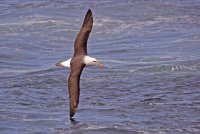
The good news is that it can be fairly simple to stop albatrosses being hooked on the longlines.

Plastic streamers flown alongside the lines scare the birds off. Putting weights on the lines helps the bait sink quickly before the albatrosses catch sight of it. Setting the lines at night when the birds are less active also helps avoid 'bycatch'.

The campaign needs your support to help rescue the world's albatrosses from disaster. Spread the word, put a banner on your blog, tell your friends and make a donation!

More tales from the high seas here, if you have the appetite...
Tuesday, July 04, 2006
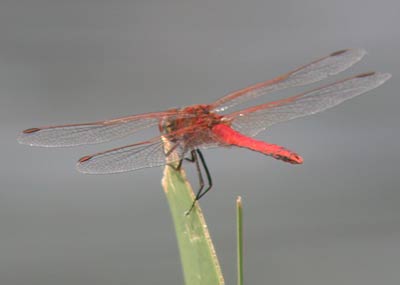
Red-veined Darters


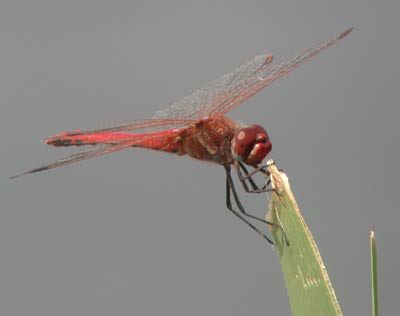
Male Red-veined Darter, Broom gravel pits, Bedfordshire

We're being invaded. Not by anything bad, just Red-veined Darters. On its status, the British Dragonfly Society website says: 'Fairly frequent migrant, principally to southwest England though scattered records from elsewhere... Breeds nearly annually, but colonies seemingly not stable.'

This year has seen the first-ever record of Red-veined Darter in Bedfordshire, and I've never seen one anywhere, so it was only appropriate to head out to Broom at lunchtime. Mark had seen a grand total of 38 there on Saturday, but we only managed about six today.

However, they're very smart insects, and not as hard to identify as I thought they might be. Being darters, they conveniently perched on top of reeds for minutes at a time, making short sorties to hunt, which meant I could get the scope on them for closer inspection.

The red veins in the wings were very apparent, and the bluish colour of part of the eyes and the orangey pterostigmata (oooh, get me! They're the spots on the wings...) were also visible without too much eye-strain.

Hopefully I'll be able to get out at the weekend and find some of my own...

photos taken with Nikon Coolpix 995 + Leica Apo Televid 77 with 20x eyepiece

Monday, July 03, 2006

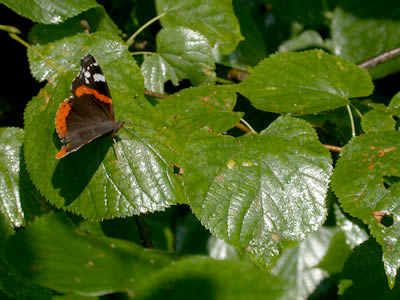
Red Admirable


Red Admiral feeding on sticky lime leaves, The Lodge.

photos taken with Nikon Coolpix 995